

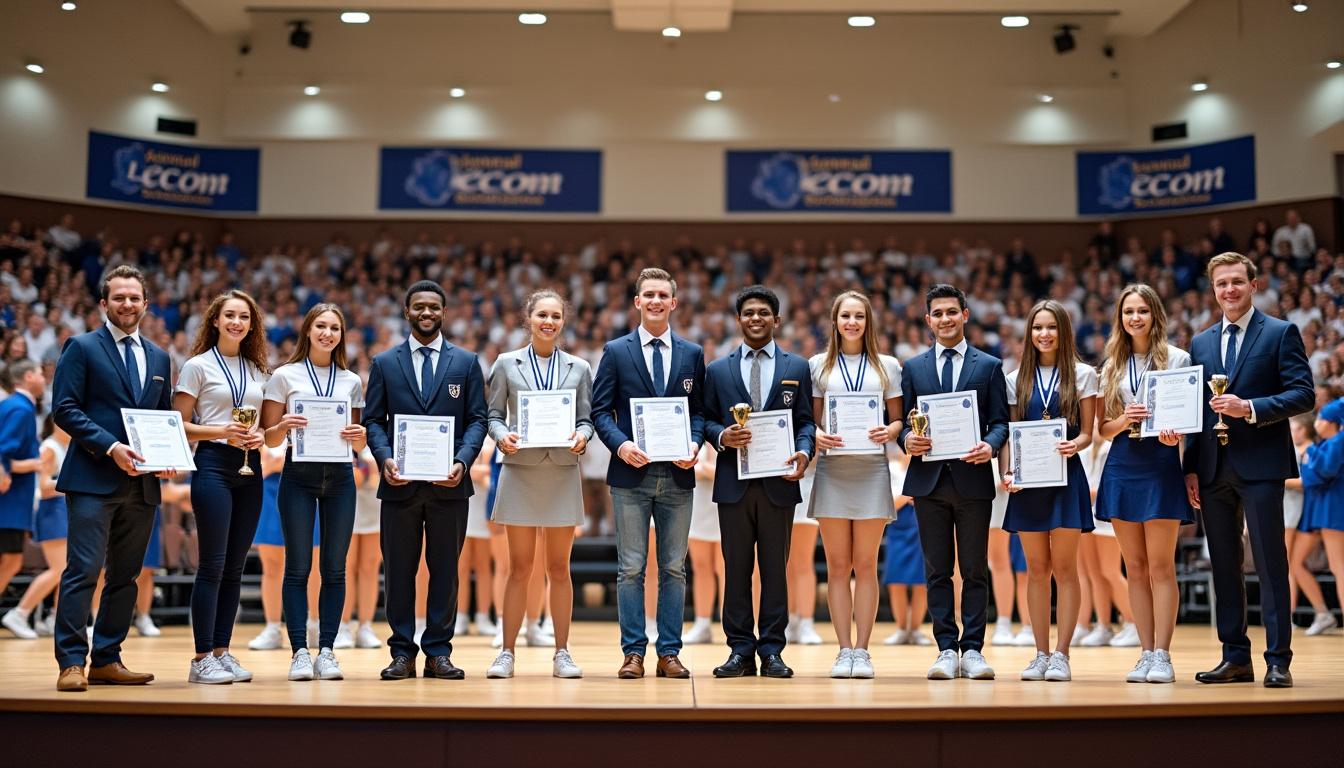
Lake Erie College of Osteopathic Medicine, or LECOM, recognized 69 students at its Annual Sports Scholarship Celebration, where professional teams tied to the program’s scholarship fund helped honor academic achievement. School officials said the Buffalo Bills, Buffalo Sabres, Cleveland Guardians, Cleveland Browns, and Cleveland Cavaliers have contributed a combined more than $350,000 to the LECOM Student Scholarship Fund.
The event centered on medical students and the outside support helping them manage the cost of training for healthcare careers. For families comparing aid options, readers should note that institution-backed scholarship funds can operate differently from federal aid, which usually still starts with the FAFSA.
How LECOM Honors Students at its annual Sports Scholarship Celebration
Saturday’s ceremony brought together campus leaders, student recipients, and representatives from pro franchises that support the school’s scholarship effort. The recognition focused on academic performance, not athletic participation, which is an important distinction for applicants reading the headline too quickly.
That structure sets this program apart from many public-facing sports awards. Here, team partnerships fund education support for future physicians, while the college uses the event to spotlight student achievement and donor recognition in one setting.
Which teams supported the awards
The college said five teams have donated to the fund: the Bills, Sabres, Guardians, Browns, and Cavaliers. Their combined giving has passed the $350,000 mark, giving the program a scale that goes beyond a symbolic one-day event.
Endowed and recurring scholarship support often matters more than one-time publicity. Students planning for several years of professional school should watch whether a fund has ongoing donor backing, because that can affect how many awards are available each cycle.
Readers who follow other sports-linked education stories can compare this model with coverage of athlete-connected scholarship programs and broader school-based aid reporting such as Junior Achievement scholarship opportunities.
Who received the LECOM scholarship recognition
The honorees were medical students selected for academic achievement, according to the event summary. The reporting did not provide a full eligibility rubric, so applicants should avoid assuming that every student in the program is automatically considered on the same terms.
Two recipients described the award in personal terms tied to hometown loyalty. Sarah Azzi said receiving support from the Cleveland Browns stood out because she grew up in Cleveland, while Christian Hahn said recognition linked to the Buffalo Bills felt meaningful because he followed the team as a child in the Buffalo-Rochester area.
What students said about the honor
Azzi said she was excited to tell her parents, adding that her father was especially pleased because he is a Browns fan. Hahn described the award as recognition from people and institutions he had admired for years.
Both comments point to a practical benefit beyond ceremony. Professional school often leaves students balancing tuition, living costs, and clinical schedules, so outside funding can reduce pressure even when the school does not disclose each individual award amount.
That context matters for prospective students. Medical scholarships usually stack with other aid differently than undergraduate awards, and some campus funds may complement loans rather than replace them outright.
How the Sports Scholarship fund works for medical education support
The event highlighted gifts to the LECOM Student Scholarship Fund rather than direct team-run contests. In practice, that means donor organizations support a college-managed pool, and the institution then recognizes recipients under its own scholarship framework.
That setup is common in higher education fundraising. A donor may provide money for a named or designated fund, while the college handles selection rules, compliance, and award timing under campus policies.
| Program detail | What the report said | Why it matters |
|---|---|---|
| Institution | LECOM | Students should check campus financial aid and scholarship offices for official criteria |
| Students recognized | 69 recipients | Shows the program reached a large group rather than a single headline winner |
| Donor support | Over $350,000 combined from five teams | Indicates sustained external backing for education costs |
| Award focus | Academic achievement among medical students | Confirms the celebration was about academics, not varsity competition |
Families should keep one point in view. Federal aid eligibility usually starts with the FAFSA, but institutional funds can require separate nomination or internal review, especially in graduate and professional programs.
Students who are building a broader aid strategy may also want to look at unrelated regional awards, including examples covered in reports on community-backed scholarship programs and state funding developments like new scholarship revenue proposals.
What applicants and families should watch after this scholarship celebration
The ceremony itself was a recognition event, not a public application launch. Students interested in similar awards should monitor official LECOM channels for future eligibility details, campus nomination procedures, or fund announcements tied to the next awards cycle.
A practical next step is straightforward:
- Check the school’s financial aid and scholarship pages for updated requirements.
- Ask whether selection is automatic or requires a separate application.
- Confirm whether academic standing, campus location, or program year affects eligibility.
- File the FAFSA if required for broader aid coordination.
For counselors, the useful takeaway is that donor-funded recognition events can signal deeper institutional partnerships. Those relationships sometimes produce recurring awards, and recurring support is usually more valuable to students than a one-off publicity grant.
Organizers framed the day around two groups: the students earning recognition and the sports organizations helping finance medical education. The next item to watch is whether the college publishes a new cycle of criteria, award amounts, or campus-specific timelines for future recipients.