

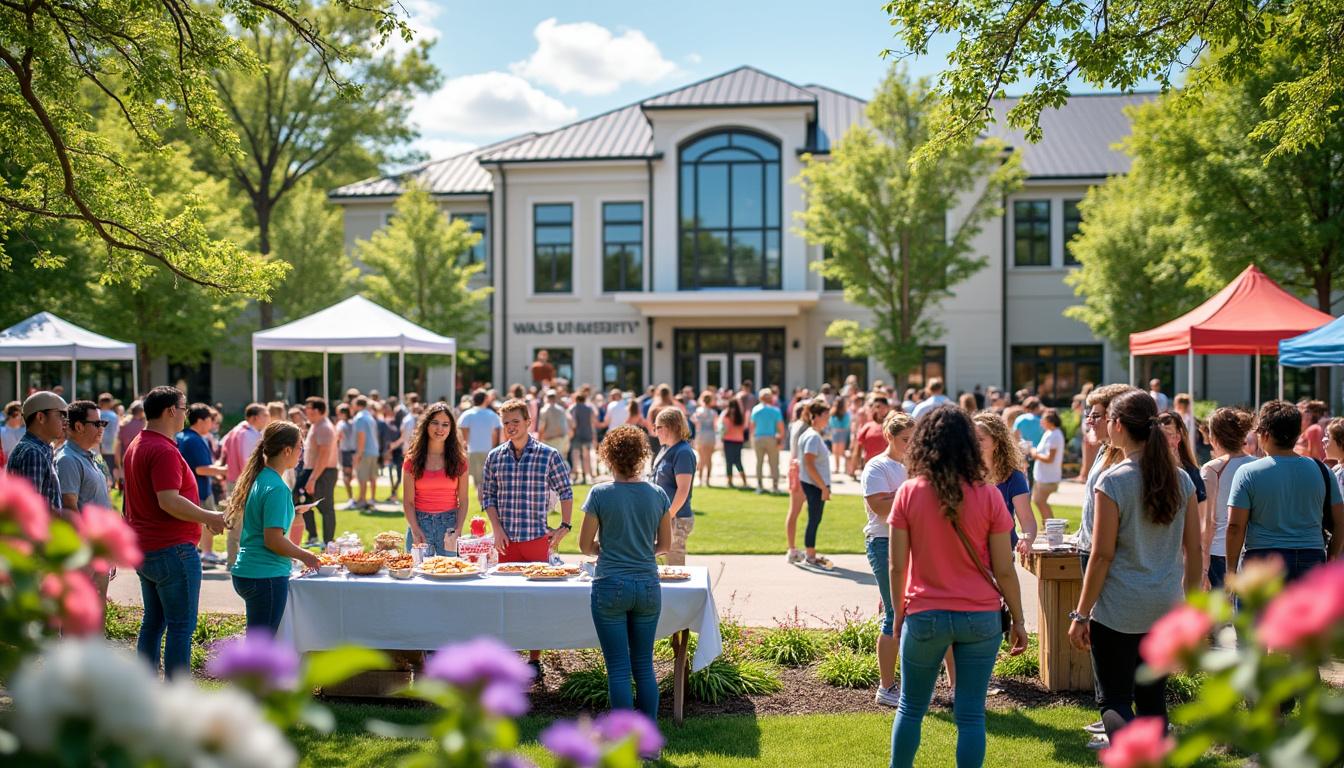
Supporting the Falls Cancer Club and Walsh University scholarships starts with knowing which local fundraising events deserve your time and donations. In the Akron and Canton area, spring brings a strong mix of charity events tied to cancer support, student aid, and wider community engagement.
If you want to help families facing medical bills or students seeking scholarships, these events give you direct ways to act. Some focus on the Falls Cancer Club. Others support Walsh University students and local nonprofit work.
Falls Cancer Club And Walsh University Scholarships Events
The strongest local fundraising calendar includes two standout causes. The Falls Cancer Club helps residents of Cuyahoga Falls and Silver Lake facing cancer-related costs, while Walsh University scholarships help students reduce the pressure of tuition and academic expenses.
This matters because small-ticket events often create wide impact. A $5 admission, a $50 luncheon seat, or family attendance at a community game night all feed larger goals such as bill relief, student aid, and long-term community engagement.
Why These Fundraising Events Matter
Think about two neighbors. One is a cancer patient in Cuyahoga Falls facing travel, treatment, and household bills. The other is a business student trying to stay enrolled through merit support and campus-based scholarships. Local fundraising connects both stories to real public action.
The Falls Cancer Club model is direct and local. Event revenue helps pay cancer-related bills for area residents. Walsh University uses scholarship events to support student opportunity, alumni ties, and academic access. The shared lesson is simple: local giving works best when donors see where the money goes.
If you follow education funding trends, you might also want to review examples like this scholarship support story and this guide to study funding. These cases show how targeted financial support shapes student choices.
Falls Cancer Club Battle Of The Badges
One of the most accessible Falls Cancer Club charity events is Battle of the Badges at Cuyahoga Falls High School Gym, 2630 13th St. Doors open at 6 p.m. on April 17. The format keeps the event family-friendly and low-cost, which is a smart move in local event planning.
Ticket pricing stays simple: $5 for adults, $3 for children ages 5 to 17, and free for children under 5. There is also a $20 family maximum. Payments are cash only, and presale access runs through the club’s donation page.
What You Get At Battle Of The Badges
This event is not only about attendance. It is built for participation. Guests get a live competition, a kids’ free throw contest at halftime, and a 50/50 raffle. Those details matter because side activities often increase donations without raising entry prices.
For parents, this is a practical model of community giving. You bring children, keep costs low, and support cancer support at the same time. That is why the Falls Cancer Club continues to stand out in local fundraising.
For tickets and updates, readers should check the club’s official donation access through its event channels. If you study nonprofit event models, this one shows how modest prices and strong turnout often beat expensive formats.
Walsh University Scholarships Luncheon
The leading Walsh University scholarships event on this list is the 55th annual Business Club Scholarship Luncheon hosted by the DeVille School of Business. It runs from 11:30 a.m. to 1:30 p.m. on April 10 at the Barrette Business and Community Center, 2020 E. Maple St., North Canton.
Tickets are $50, and the event features Thomas B. McGowan IV, president and CEO of the McGowan Companies, as keynote speaker. This type of luncheon works well because it blends donor outreach, leadership access, and direct student aid goals in one room.
How The Walsh University Scholarship Model Helps Students
Walsh University has long linked alumni and business leadership to campus giving. A scholarship luncheon does more than raise money. It places students near executives, faculty, and supporters who often shape internships, mentoring, and long-term career paths.
For you as a donor, the appeal is clear. A $50 ticket supports a structured scholarship effort rather than a vague cause. For students, even one funded award can reduce debt pressure, improve retention, and keep academic plans on track. That makes Walsh University scholarships an example of focused fundraising with measurable value.
If you want more scholarship-related examples, see firefighter scholarship support and a scholarship honor story. These examples show how community identity often drives giving.
Other Charity Events Around Akron And Canton
The regional calendar includes more than the Falls Cancer Club and Walsh University. Several nearby charity events create a wider giving culture, which helps all nonprofits. When one event performs well, it often lifts visibility for others.
Here are key events to watch:
- A Whiskey Deemed Worthy, 7:30 p.m. on April 17, at the Akron Civic Theatre, 182 S. Main St., Akron. Guests choose four full pours or eight half pours, plus food tastings from local restaurants. Attendance is limited to age 21 and older.
- Battle of the Bands Fundraiser, April 18, at the Magical Theatre Company, 565 W. Tuscarawas Ave., Barberton. Doors open at 5 p.m. and performances start at 6 p.m.. Tickets are $25 general admission with an optional $5 glow package.
- Canton Prom 2026, benefiting the Canton Palace Theatre, at 7:30 p.m. on April 25 at the Historic Onesto Event Center, 225 Second St. NW, Canton. Tickets cost $125 per couple or $75 each.
- NAMI Summit County Annual May Luncheon, 11:30 a.m. to 1 p.m. on May 7, at the DoubleTree by Hilton Akron Fairlawn, 3180 W. Market St., Akron. Tickets are $65, with keynote speaker Kody Green.
- exhALE: Advanced Lived Equality Fundraiser, 6 p.m. on June 5, at House Three Thirty, 532 W. Market St., Akron. The event marks the 25th anniversary of the Gay Community Fund of Akron Community Foundation.
What These Charity Events Teach About Event Planning
Each event uses a different path to attract support. Sports, music, tastings, luncheons, and social galas reach different age groups and income levels. That range is useful in event planning because one format never fits every donor base.
For example, the Falls Cancer Club keeps entry costs low to pull in families. Walsh University scholarships rely on a luncheon format tied to professional networking. A theater benefit leans on social appeal and entertainment. The lesson is clear: strong fundraising matches the cause with the right audience.
How To Support Falls Cancer Club And Walsh University Scholarships
You do not need a large budget to help. Smart support often starts with one ticket, one share, or one group outing. If you want your help to count, focus on actions with direct local effect.
- Pick one event tied to your values, such as cancer support or student aid.
- Buy presale tickets when available so organizers can plan staffing and food.
- Bring friends or family to increase turnout and total donations.
- Support add-ons like raffles, food purchases, and side contests.
- Check the nonprofit or school page before giving, so you know where funds go.
This approach helps both donors and organizers. It also builds stronger community engagement, which is often the difference between a one-time event and a lasting annual tradition.
Where To Find More Local Fundraising Opportunities
If your organization wants public visibility for upcoming charity events, local listings still matter. Event details for area social and benefit activities are often sent to The Scene at the Akron Beacon Journal. Notices should arrive at least two weeks in advance for a better chance of publication.
You should still verify any cause before giving. That is a sound rule for every donor in 2026. Whether you support the Falls Cancer Club, Walsh University scholarships, or another nonprofit, informed giving protects your money and improves trust across the local giving network.
Readers who track wider nonprofit trends might also find value in this city gala example and this community fundraiser case. Both show how local support grows when events feel visible, useful, and easy to join.