

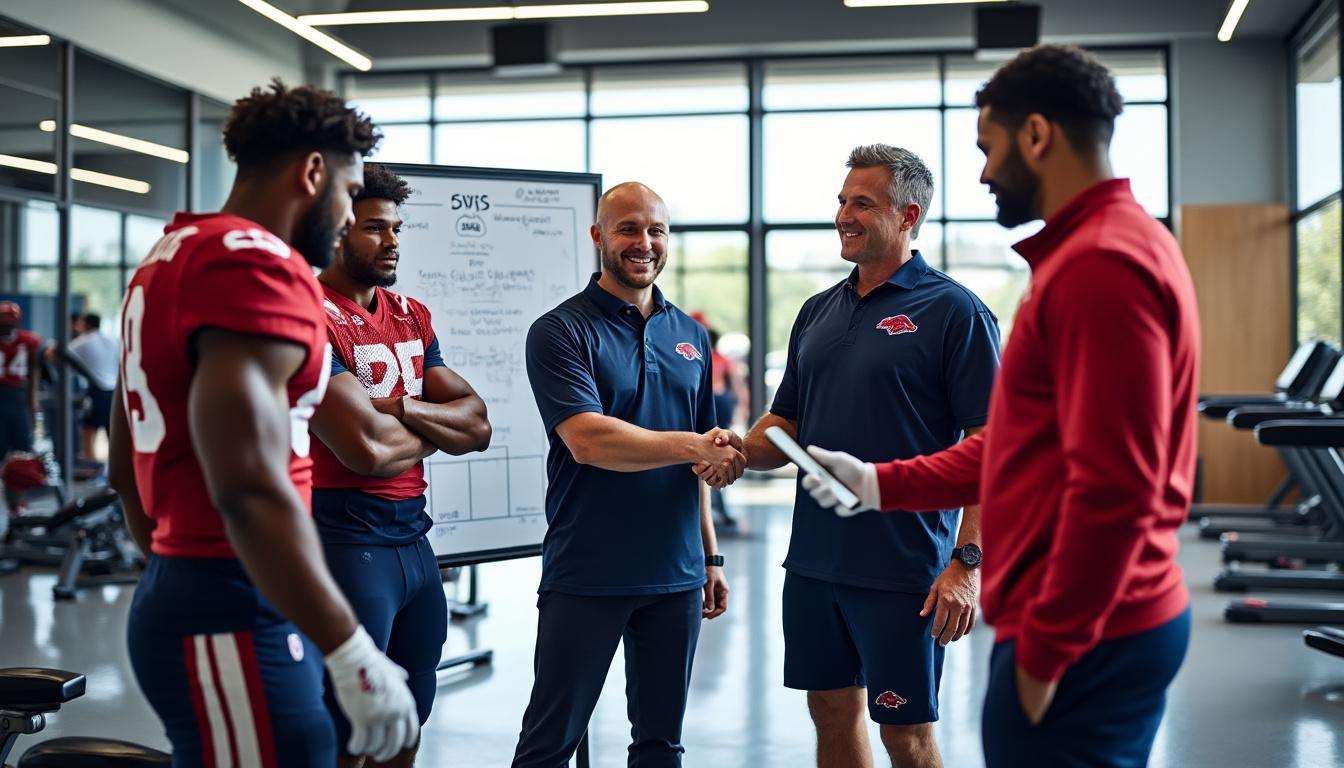
The new scholarship rules in college football change how rosters work, and an Insider report suggests the Arkansas Razorbacks now follow an informal agreement inside the SEC on a fresh roster scholarship cap. This affects players, families, and anyone who tracks athletic scholarships and NCAA recruiting strategy.
Insider view on Arkansas Razorbacks and the SEC roster scholarship cap
The House settlement removed old scholarship limits and replaced them with roster caps across college sports. In football, the rule moved from 85 scholarships with unlimited walk-ons to a 105-player roster where every spot can hold a scholarship.
An Insider close to the Arkansas Razorbacks reports that SEC athletic departments now follow a quiet informal agreement. Instead of funding all 105 players, they keep a working scholarship cap of about 90 full rides for football.
This means Arkansas and other league programs still use the 105-player roster, but around 15 players stay as walk-ons or receive partial aid. The Razorbacks already tested partial awards when the staff split one scholarship between three specialists.
How the informal SEC agreement shapes the Razorbacks roster
Under this new approach, the Arkansas Razorbacks roster holds 105 players, yet the internal scholarship cap sits at about 90. Coaches then decide who receives full scholarships, partial support, or no aid.
The effect is clear. High-end starters and key depth pieces receive full funding. Developmental players and specialists fight for partial awards, while true walk-ons fill out the rest. This structure guides how Arkansas builds position groups, especially in the secondary and on special teams.
The same logic appears across the conference, so the SEC stays balanced. No single school floods its depth chart with 105 scholarship-level players while others cap out at 80 or 85.
Money, revenue sharing, and the new scholarship cap in college football
This informal SEC scholarship cap grows from money pressure, not from a lack of interest in talent. The House settlement brought in direct revenue sharing, which sends large payments from athletic departments to athletes across sports.
For Arkansas, the revenue sharing pool sits around 20.5 million dollars for a season. Out of that figure, at least 2.5 million supports new scholarships in non-football sports, as required by the College Sports Commission. The rest goes to direct payments for football and other athletes.
If a department dips into that 2.5 million for extra revenue sharing, it pays a fine and faces limits on future payouts. The rules will soften in coming years, with a lower penalty and no carryover hit, but the financial risk still matters when Arkansas plans its football roster.
Why athletic scholarships now tie so closely to department budgets
Scholarships do not only cover tuition. They tie into housing, nutrition, academic support, and training costs. When an SEC program raises its football scholarship count from 85 to 105, the true price jumps well beyond twenty extra tuition bills.
Arkansas already trimmed staff and changed arena seating plans to cover new settlement costs. Other flagship programs like Kansas, Michigan, Oklahoma, Stanford, Texas A&M, and Tennessee also made cuts or added fees to absorb similar financial shocks.
Holding the working scholarship cap near 90 helps protect budgets while still letting coaches fill a competitive NCAA college football roster. For more detail on how revenue sharing intersects with aid packages, you can look at how another program balanced NC State revenue and scholarships in football and other sports.
The takeaway is simple. Money guides roster math now, even for a traditional football brand like the Arkansas Razorbacks.
How the informal SEC cap changes NCAA recruitment and walk-on roles
The new informal agreement shapes recruitment across the conference. With about 90 full scholarships to hand out, Arkansas staff must weigh each offer against both the cap and the NIL and revenue sharing budget.
High school recruits and transfer targets now expect more than tuition. They track revenue share projections, NIL potential, and playing time before they commit. Three, four, and five star players want a full package, not only a line on the depth chart.
This pushes Arkansas to reserve full scholarships for players projected to contribute on the field. Walk-ons still matter, but they fill different roles. Many walk-ons now accept that they play without revenue share or major NIL help, at least early in their careers.
Partial scholarships and example from other football programs
The House settlement removed the old FBS rule that blocked partial football scholarships. Arkansas already tested this by splitting a single scholarship across three specialists. That approach might grow in importance as staff manage the roster scholarship cap.
Partial awards offer a middle ground. A developmental safety or long snapper might receive a half scholarship and then move to a full award after earning a starting spot. This structure also exists in other programs that juggle revenue and aid, such as the situation covered in detail for NC State athletic scholarships.
Walk-ons still chase the dream of earning full aid, but the presence of partial awards adds another layer to NCAA recruitment strategy.
Arkansas Razorbacks secondary rebuild and what it reveals about roster strategy
The 2026 Arkansas defensive backfield shows how the new roster rules influence actual recruiting decisions. The Razorbacks do not return a single scholarship defensive back from the previous season.
Instead, they rebuilt the entire secondary through the transfer portal and high school signings. New faces include proven players from Tulane, Maryland, Clemson, and Georgia State, all expected to challenge for starting spots right away.
This clean slate brings risk. Tackling habits, communication, and coverage rules all must start from zero. At the same time, the staff used the scholarship cap more flexibly, pulling in older transfers who fit the scheme instead of keeping depth players who were not projected to contribute.
Case study: full scholarships vs depth in the rebuilt secondary
In this new secondary, top transfer corners and safeties hold full scholarships, plus access to revenue share. Younger backups or special teams-only players might sit on partial aid if the staff wants more room within the working 90-scholarship target.
That choice reflects a clear tradeoff. Arkansas secures game-ready defenders for immediate SEC play while asking some developmental players to bet on themselves. Strong performance brings a chance at a later upgrade to a full award.
Other programs use similar approaches with position groups under pressure. For instance, detailed breakdowns of Indiana football transfers show how Big Ten staff use the portal to rebuild specific units without exceeding internal budget limits.
What players and families should watch in the new NCAA scholarship era
The combination of a 105-player roster, a working 90-player scholarship cap, and revenue sharing changes the questions recruits and parents need to ask. The label “on the team” now means different things for financial aid and on-field opportunity.
Before committing, prospects should expect clear answers on scholarship status, revenue share, NIL expectations, and the path toward full aid. An Insider view from any program matters less than written terms laid out in official documents.
Families who understand this framework can compare offers more effectively. Some programs might offer a partial award with a strong path to full funding, while others offer a full scholarship but less NIL upside. Articles on topics like revenue-linked scholarships at NC State help you see how different schools structure these deals.
Key questions to ask about roster and scholarship status
Before you commit to an NCAA college football program under this new system, you should press for detail. This list gives you a clear starting point.
- How many scholarships are you planning to use on your football roster this year? Ask if the staff plans to stop at 85, 90, or another number.
- Will my offer be full, partial, or walk-on with a later review? Request specifics on tuition, housing, and meals.
- How do revenue share and NIL interact with my scholarship? Clarify if walk-ons or partial scholarship players receive revenue share.
- What is the realistic depth chart path in my first two seasons? Tie financial terms to expected playing time.
- How did your program handle staff or budget cuts after the House settlement? This hints at long-term stability.
The more direct your questions, the easier it becomes to judge whether a program uses its roster scholarship cap in a way that fits your goals.