

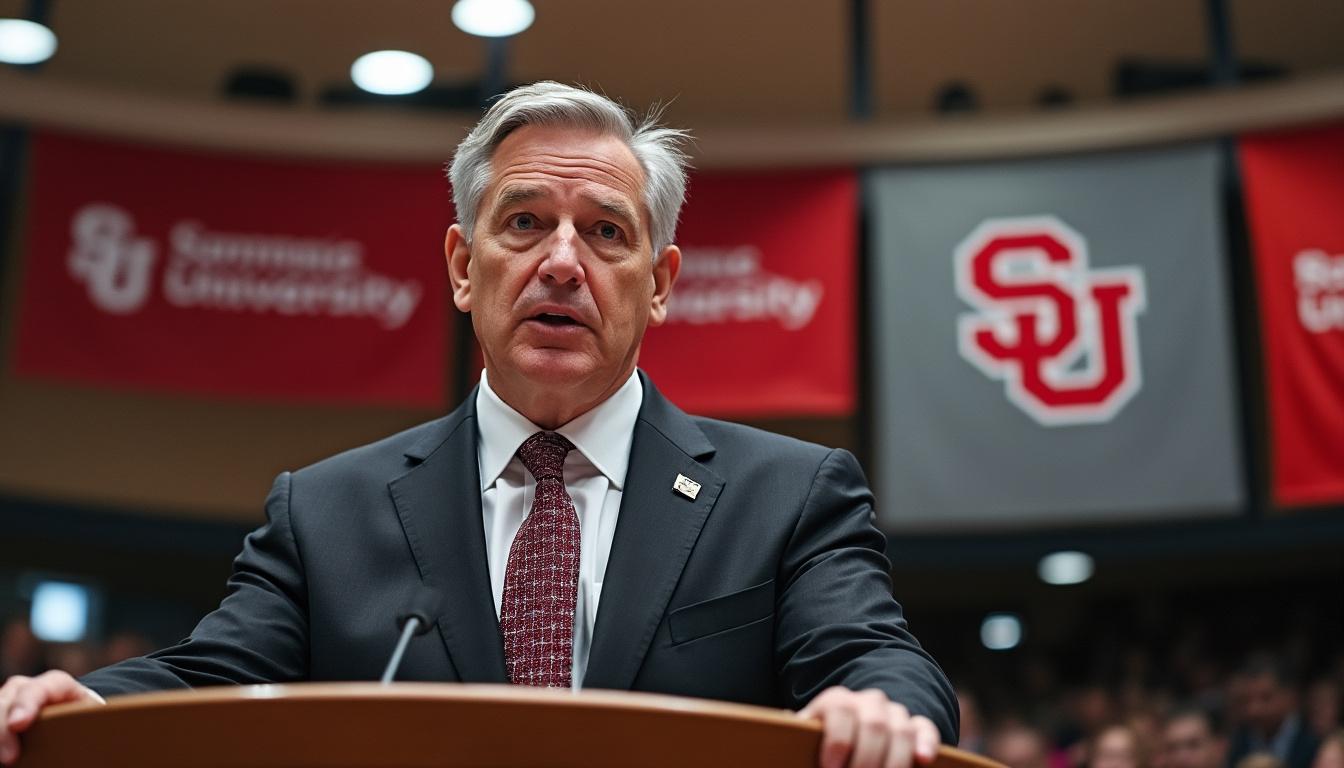
The Ohio State leadership shock around President Ted Carter raises big questions for students who depend on strong and stable university governance. Understanding this resignation scandal helps you read signals about trust, ethics, and future funding priorities at Ohio State and similar institutions.
Ohio State President Ted Carter Resignation Scandal Explained
President Ted Carter, age 66, left Ohio State after a little more than two years in office. He informed the Board of Trustees about an inappropriate relationship with someone who sought public resources for her personal business, then offered his resignation.
The board held an unusual closed executive session that lasted about three hours before accepting his decision. In its statement, the university leadership expressed surprise, disappointment, and concern about the impact of the scandal on campus life and public trust.
Key facts about the Ted Carter resignation controversy
The details released by Ohio State stay limited, but several elements stand out. Together they show how fast a leadership crisis grows once ethical boundaries are crossed.
- Role and timing: Carter became Ohio State President in January 2024 and left office in early March after a short tenure.
- Nature of the issue: He admitted an inappropriate relationship with a person seeking access to university leaders to gain public resources for her private business.
- Board reaction: Trustees accepted his resignation quickly and stressed the seriousness of the controversy in their letter.
- Campus message: Carter told the community he “made a mistake in allowing inappropriate access to Ohio State leadership.”
- Open questions: The institution refused to provide more detail about the relationship or the individual involved.
The lesson for students and families is clear: governance can look stable on the surface while hidden ethical risks threaten the institution underneath.
Impact Of The Ted Carter Scandal On Ohio State Leadership
The Ted Carter resignation hits Ohio State at a moment when trust in higher education leadership already feels fragile. The previous president, Kristina Johnson, also left after about two years amid tension with the same Board of Trustees.
Two abrupt departures in a row raise concern about continuity, strategic focus, and internal culture. For a large public university, these issues affect everything from state support to faculty recruitment.
Why the Ohio State presidency controversy matters for students
At first, a leadership scandal looks distant from daily student life. Look closer and you see how a disrupted presidency influences your experience and your opportunities.
Several student-focused impacts appear when a President leaves in the middle of major plans:
- Stability of scholarships: New funding programs tied to the former president’s vision face review or delay.
- Strategic priorities: Initiatives in areas like AI, research, or diversity risk losing support during transition.
- Reputation risk: A high-profile controversy affects how employers, donors, and scholarship committees view the university.
- Student voice: Leadership gaps create chances for student groups to demand clearer ethics and oversight.
For any student who depends on stable education funding, leadership continuity is not an abstract concern but a concrete condition for success.
Ted Carter’s Background And Education Leadership Record
Before the scandal, Ted Carter built a long career in military and academic leadership. He graduated from the U.S. Naval Academy, trained at the Navy Fighter Weapons School known as Top Gun, and completed advanced studies at several war and staff colleges.
He served as the longest continuously serving superintendent of the Naval Academy since the Civil War, then moved on to lead the University of Nebraska system. This wide leadership record helped convince Ohio State trustees he fit the role of President of a major public university.
From Top Gun to Ohio State presidency
To understand why this resignation surprised many observers, look at Carter’s path. His Navy career focused on discipline, chain of command, and public service. He then guided large educational systems with complex budgets and political pressure.
Trustees praised him for “steady leadership” and his role as an ambassador for the land-grant mission. In 2024 they granted him a 4.5 percent merit raise and a substantial bonus tied to performance. On paper, he looked like the model of reliable university leadership.
When a leader with such a strict professional background steps into an inappropriate relationship scandal, it shows how ethical lapses can override decades of experience.
Education For Citizenship 2035 And What Happens Now
One of the main legacies of the Ted Carter presidency at Ohio State is the “Education for Citizenship 2035” strategy. Carter spent much of his first year on a listening tour, meeting hundreds of students, faculty, staff, and external partners.
The 10-year plan, launched in mid-2025, aimed to align education, research, and public service with the university’s historic mission as a land-grant institution while updating it for digital, global realities.
Core elements of Ohio State’s Education for Citizenship 2035 plan
Although the presidential scandal dominates headlines, the strategy he launched still shapes the future of Ohio State. For a student planning your path, these elements matter more than the personal controversy.
- New scholarships targeting high-achieving and underrepresented students across Ohio and beyond.
- Focused investment in six key colleges to strengthen areas like engineering, health sciences, and public policy.
- AI Fluency initiative to help all students understand and use artificial intelligence in their fields of study.
- $100 million faculty initiative to attract top researchers and educators to the university.
The open question now is whether interim and future leaders keep the 2035 vision intact or redirect resources toward new priorities.
What The Ohio State Resignation Means For University Governance
The Ohio State President Ted Carter resignation scandal serves as a case study in modern university governance. Large institutions carry billion-dollar budgets, complex politics, and heavy public expectations. Ethical checks around the President role must match that scale.
Students like Maya, a fictional second-year scholarship recipient, often assume leaders will follow strict rules in the background while they focus on lectures, labs, and exams. Events like this show why student awareness of governance structures matters.
You study at a university for knowledge, but you also depend on its integrity. How do you respond when a leadership scandal hits your campus or a place where you hope to study with a scholarship?
- Watch governance signals: Follow Board of Trustees announcements, not only presidential speeches.
- Track strategic plans: Check if scholarship programs or academic initiatives still follow published timelines.
- Engage constructively: Use student government, forums, and listening sessions to demand clear ethics and transparency.
- Protect your path: Keep backup options for funding, including external scholarships and grants outside the affected institution.
When you stay informed and engaged, even a major controversy around a President does not control your entire educational future.