

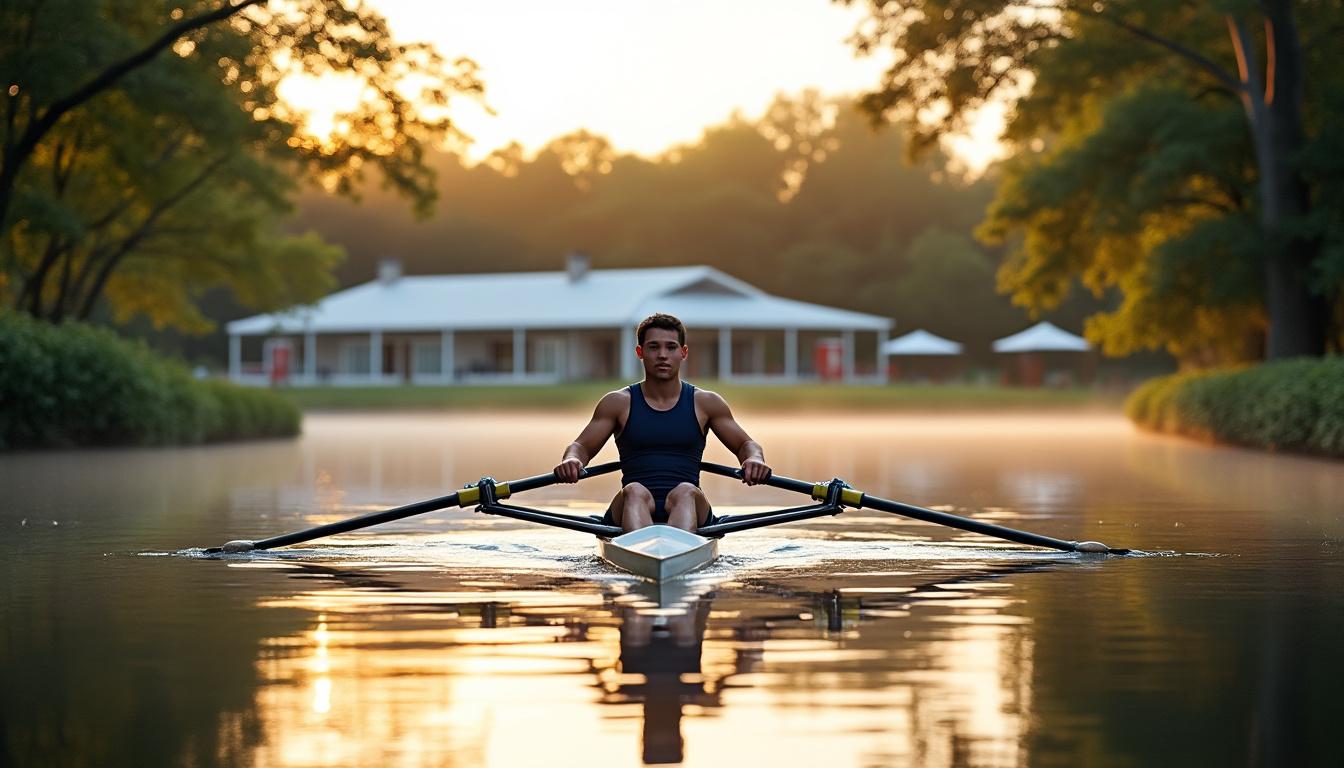
From backyard practice to college prestige, Middle Park senior Peyton Fosha turned a self-taught rowing journey into a full Division I scholarship. Her path shows how structured effort, smart academic choices and sports dedication can open real scholarship achievement opportunities for student athletes.
Self-Taught Rowing Journey From Backyard Practice To College Prestige
Peyton’s story starts far from a boathouse. Her first rowing strokes happened on a garage rowing machine after a family friend and former U.S. national team rower suggested the sport fit her body type and endurance background. That simple backyard practice routine grew into a serious rowing training schedule built around two-kilometer time trials and video study.
She watched elite races, recorded her own technique, and compared angles frame by frame. Without a formal coach, she relied on feedback from that mentor and her parents, adjusting posture, drive and recovery. Over months, her times dropped enough to interest Division I programs, proof that a structured self-taught plan still supports strong athlete development if you stay consistent.
How Academic Flexibility Supported Rowing Training
Peyton used a flexible class schedule at Middle Park High School to protect both grades and training. She lifted or rowed before the first bell, focused on coursework during the day, then shifted into practice for other sports once classes ended. This structure limited wasted time and reduced late-night study sessions.
Morning backyard practice on the erg built rowing-specific power, while afternoons in volleyball, hockey, Nordic skiing and soccer strengthened agility, stamina and coordination. The result was a balanced routine that supported both academic progress and intense sports dedication without collapsing under burnout.
Middle Park Senior Balancing Multi-Sport Life And Scholarship Goals
As a Middle Park senior, Peyton maintained a year-round athletic schedule most students would consider impossible. Fall meant volleyball. Winter brought both hockey and Nordic skiing at the same time. Spring shifted to soccer. Each sport targeted different muscle groups and energy systems, which later helped her rowing journey.
This variety also protected her from early specialization. By staying multi-sport, she built a wide base of movement skills and mental resilience. When rowing entered the picture, she already understood training cycles, recovery, competition nerves and time management, all crucial for long-term athlete development.
Family Influence And Long-Term Athlete Development
Peyton’s parents, both former college athletes, shaped this approach. Her father grew up skiing and later played baseball at a technical university before picking up Nordic skiing as an adult. Her mother swam at the collegiate level, earned All-American honors, and later joined a U23 national triathlon squad.
Their message to both Peyton and her younger brother was simple. Try many sports, stay active for life, and remember that being a good person matters more than medals. This outlook kept results in perspective even as scholarship achievement became possible, and it reduced the pressure that drags many teenagers out of sport too early.
From Garage Rowing Machine To Division I Scholarship Offers
The key turning point in Peyton’s rowing journey came when she tested herself on a standard two-kilometer ergometer trial. She rowed alone in the garage, tracked her splits, and recorded the piece. Her time placed her in a competitive range for Division I programs despite her lack of on-water experience.
She then built a simple recruiting profile, including erg scores, multi-sport background and academic results. Coaches saw an athlete with size, strength and endurance built through years of cross-country skiing, hockey and volleyball. For them, her self-taught status was not a problem. It signaled raw potential they could shape inside their system.
Why Coaches Value Self-Taught Rowers
Division I rowing coaches often search for tall, strong, coachable athletes who show progress over time. Peyton fit this profile. She was the rare recruit who had never raced on a traditional team yet posted strong erg scores. In one recruiting class, she was the only out-of-system rower, which made her stand out.
Coaches understood she needed technical development, but they also saw a history of disciplined training across several sports and evidence of learning alone. This mix of self-directed work and multi-sport experience matched what top programs look for when they invest a full-ride Division I scholarship in a new athlete.
College Prestige And Life On A Division I Rowing Team
After visiting multiple campuses, including rowing camps in Denver and Stanford, Peyton took a recruiting trip to the University of Texas at Austin. She met the coaching staff, observed team culture and watched how student athletes balanced classes with training. The program’s record, facilities and academic support persuaded her to commit.
She signed in November to join a major conference women’s rowing team on a full scholarship. This move from backyard practice to college prestige reflects more than a single erg result. It shows how years of structured training, high school leadership and academic focus align when a student athlete approaches recruitment with intention.
What To Expect As A New Division I Rower
For a self-taught rower entering a top program, the first year often centers on technique, strength, and adapting to volume. Early mornings on the water, afternoon lifts and team meetings dominate the schedule. Athletes need to manage labs, papers and exams around this fixed training block.
Peyton enters with strong time management skills built in high school. When you wake before sunrise to work out, attend a full day of classes, then compete in two sports during winter, you gain habits that transfer directly to college prestige environments and reduce the risk of falling behind academically.
Sports Dedication, Mental Strength And Avoiding Burnout
Training alone on a rowing machine for hours demands more than physical capacity. Peyton describes mental endurance as her biggest challenge. Without teammates beside her, she had to create internal strategies to stay on task. She broke long sessions into intervals, set clear pace targets and reviewed technique each week.
This focus limited the boredom and frustration that often appear during repetitive erg pieces. It also built mental toughness she later applied in games, races and exams. Instead of viewing training as punishment, she treated each session as a specific task moving her closer to scholarship achievement and future goals.
How Her Brother Learns From The Same Path
Peyton’s younger brother watched this process from the start. As a freshman, he took part in cross-country, hockey and Nordic skiing, with interest in track and lacrosse. He saw that consistent effort, not instant results, brought opportunities to his sister. His personal goal is steady improvement in running and skiing, not quick specialization.
The siblings trade stories from practices, compare race days and help each other reset after setbacks. This shared journey strengthens their bond and turns sports dedication into a family habit rather than an individual burden, which supports long-term athlete development for both.
Practical Lessons From A Self-Taught Rowing Journey
Peyton’s path holds clear lessons for students who want to move from backyard practice to college prestige without direct access to elite clubs. Her experience shows how disciplined planning, smart use of free time and strong family or mentor support combine into a realistic route toward a Division I scholarship.
If you sit in a small town or a school with limited facilities, her story shows you still have options. The key is to treat each step, from your first erg piece to your first recruiting email, as part of one long-term process instead of a quick fix.
Action Steps For Student Athletes Seeking Scholarship Achievement
Use these steps to guide your own transition from local training to national attention.
- Audit your schedule: Map your week and locate 60 to 90 minute windows for focused rowing training or strength work.
- Build a simple plan: Mix easy aerobic work, intervals and technique drills on the erg instead of repeating random hard pieces.
- Track data: Log distances, times, heart rate and perceived effort. Recruiters respond to clear progress over months.
- Record your form: Film from the side and front. Compare to high-level rowers in online videos and adjust posture and timing.
- Seek mentors: Reach out to former college rowers, local coaches or teachers who understand high performance sport.
- Protect academics: Keep grades strong. Many full-ride offers go to athletes who prove they handle demanding coursework.
- Explore funding options: Look for academic and regional programs, such as resources similar to state-focused scholarship guidance, to stack opportunities.
- Contact programs early: Email coaches with your erg scores, transcript and sports history as soon as you have solid data.
Each step strengthens your profile and shows coaches you treat your own rowing journey like a serious project, not a hobby.
Linking Rowing Training To Wider Scholarship Strategies
Rowing sits within a broader scholarship landscape. Students who follow a plan similar to Peyton’s still need to study general scholarship options, from regional awards to need-based grants. Understanding filing dates, essays and recommendation letters often matters as much as shaving seconds off your 2k.
You benefit from exploring guidance platforms and regional programs early in high school so you do not depend on a single athletic offer. For example, students in some states use resources like Oregon scholarship listings to build a layered funding strategy that combines sport, academics and community awards for stronger financial security.
Why Peyton’s Story Matters For Future Student Athletes
Peyton’s move from garage erg sessions to a Division I rowing scholarship shows that origin stories do not need perfect facilities or famous programs. What matters is consistent training, thoughtful use of your environment and a clear view of how sports dedication intersects with school and life values.
Her case shows you that a self-taught approach, backed by family support and smart planning, still leads from backyard practice to college prestige when you combine effort with informed choices and a willingness to learn faster once you reach the next level.