

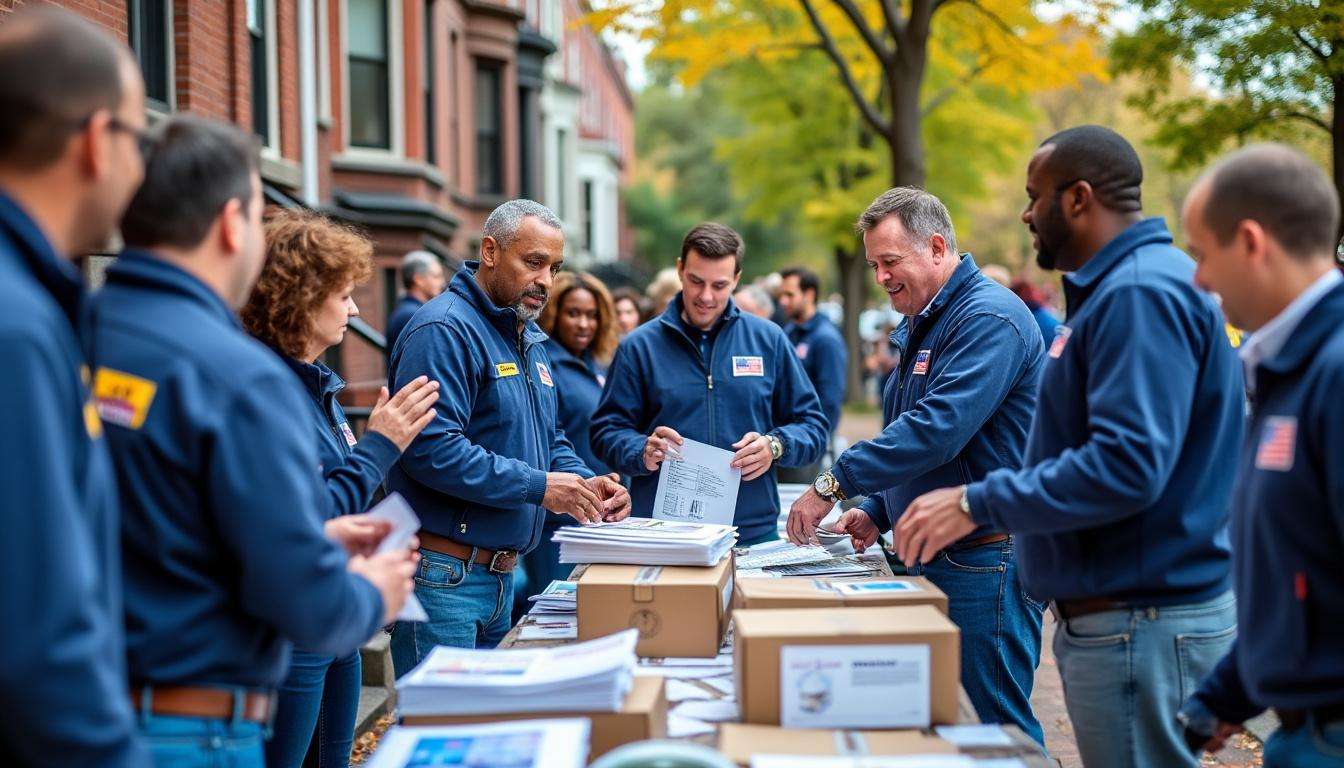
Teamsters Unite in Boston to Raise Scholarship Funds Combating the AI challenge shows how a union uses education to protect workers in a time of automation. In Boston, union members, families, and allies gathered to grow a scholarship fund that prepares students for jobs at risk from artificial intelligence and for trades that keep communities running.
Teamsters Unite In Boston: Scholarship Fundraising Against The AI Challenge
The Boston scholarship reception brought together Teamsters from across the country for a focused fundraising effort. The goal was clear: raise fresh scholarship funds to help the children of members pay for college, community college, or vocational programs that prepare them for the AI challenge.
At the packed hall in the Seaport, Teamsters President Sean O’Brien warned that artificial intelligence threatens a wide range of white-collar jobs. He stressed that many roles students train for today risk replacement by algorithms if workers and unions do not adapt their education paths.
The event raised another $3 million for the Teamsters Scholarship Fund, on top of tens of millions already collected since its launch. Since its creation, the fund has distributed more than $14.5 million in support, including $1.2 million in a single year through around 600 one-time scholarships for students in four-year universities, community colleges, trade programs, and vocational schools.
Sean O’Brien’s Warning On AI And Jobs
Sean O’Brien used the Boston gathering to issue a direct warning. He told members that the next wave of AI and automation threatens a wide range of office jobs. He mentioned accountants, lawyers, and even doctors as examples of roles where parts of the work risk being automated on a large scale.
For O’Brien, the response is not fear but preparation. He argued that unions and families need to guide young people toward careers with a future, where human skills matter. He pointed to work such as construction, electrical trades, and truck driving as examples of roles where society still needs people who, as he put it, can swing a hammer, wire a house, or drive a truck.
This message set the tone of the night: the Teamsters will meet the AI challenge with smart education choices and targeted scholarships, not by standing still.
How Teamsters Scholarship Funds Support Education Against AI Risks
The Teamsters Scholarship Fund uses its resources to support a broad range of study paths. Instead of focusing only on traditional four-year colleges, the fund encourages students to think about what is sustainable, what has a strong future, and what offers a clear career path that stands up to automation.
O’Brien repeated a simple set of questions for students and parents: What careers will still exist after the next wave of AI? Where do workers bring unique value? Which roles let you build a long-term future while keeping your community strong? Scholarships serve as the bridge between those questions and real training.
The union also highlights that these scholarships are funded by members, not employers. The leadership refuses donations from companies. This choice sends a clear signal that the Teamsters take care of their own and that the fund exists to empower the next generation of working families, not to polish corporate brands.
Who Benefits From Teamsters Scholarships In Boston And Beyond
The fund targets dependents of Teamsters members across the United States, Canada, and Puerto Rico. Many recipients are first-generation college students, others follow parents into the trades, and some blend both paths by combining technical programs with academic degrees.
Take a fictional example like Maria, a high school senior from a Teamsters family outside Boston. Her parent drives a union truck route. With scholarship help, Maria enrolls in a community college program that combines logistics, data analysis, and practical warehouse operations. She learns how AI shapes shipping schedules while building hands-on skills that employers need.
Students like Maria show how scholarship funds linked to the AI challenge push young people toward careers that merge technology awareness with practical experience.
Boston Fundraising And Union Solidarity In Action
The Boston event highlighted a strong sense of solidarity. Members from local unions, national leaders, and public officials shared the stage. Their common focus was clear: link fundraising for scholarships with a larger fight for decent jobs in an age of automation and offshoring.
U.S. Representative Lori Trahan spoke about watching her father work as an ironworker. She described how union members supported her family, even in difficult moments such as his funeral. Her message to the room was simple: make the most of every chance, protect your fellow workers, and stand by their families.
Her story matched the experience of many in the hall. Union solidarity is not abstract. It shows up as a fellow member dropping food at your door, calling when you lose a job, or helping your child pay tuition through a scholarship.
Raising $3 Million: A Concrete Step Against The AI Challenge
By the end of the night, Sean O’Brien announced that the event had raised another $3 million for the scholarship pool. This new total pushes the Teamsters Scholarship Fund past the point where it has distributed more than $14.5 million over its life, supporting hundreds of families.
Many attendees described the atmosphere as both serious and hopeful. They understand the risks from AI to traditional jobs, yet they also see education as a direct answer. Every new scholarship awarded represents one more student who faces the AI challenge with training, not fear.
O’Brien summed up the attitude with a line that echoed around the hall: “Failure is not an option.” For him, that means no failure in protecting jobs, no failure in supporting families, and no failure in adapting worker skills to the future.
Education Choices That Stand Up To AI And Automation
The Boston gathering did more than celebrate fundraising. It also pushed families to rethink which study paths handle AI pressure best. Not every degree has the same exposure to automation, and not every trade avoids technology change.
The Teamsters encourage students to match their interests with roles where human judgment, physical presence, or complex coordination matter. That includes both white-collar and blue-collar options. The message is not to run from technology, but to choose fields where technology supports human workers instead of replacing them.
Unions and students can use scholarships to redirect careers from vulnerable tasks to resilient ones. This targeted approach links education policy with real job security.
Examples Of Study Paths To Face The AI Challenge
Here are study directions often highlighted in conversations around the Teamsters Scholarship Fund and the AI challenge:
- Skilled trades such as electricians, plumbers, and mechanics where hands-on work and local presence matter.
- Transportation and logistics where human oversight, problem solving, and safety judgment stay central.
- Healthcare roles that mix technology with direct patient contact, like nursing and allied health.
- Advanced manufacturing where workers set up, maintain, and improve automated systems.
- Public safety and infrastructure jobs that protect communities and require trust and accountability.
Each of these tracks faces automation pressures, but in most of them AI acts as a tool, not a replacement. Scholarships help students move into these roles with lower debt and stronger confidence.
Teamsters, Local Jobs, And Economic Stability In Massachusetts
The Boston event also took place against a backdrop of local economic worries. During his remarks, O’Brien pointed to the decision by Campbell Soup Company to shut down the Cape Cod Potato Chips plant in Hyannis. The move will end over 40 years of local production and cost at least 49 jobs.
For Teamsters and other unions, this closure is a warning sign. When production shifts to distant states, communities lose more than paychecks. They lose local spending, tax revenue, and a sense of shared purpose built around a workplace. The loss connects directly to the debate about automation, offshoring, and the role of unions in defending stable employment.
O’Brien told members that it is important to do everything possible to keep employers rooted in Massachusetts. Protecting jobs, industries, and responsible developers forms part of the same fight as raising scholarship funds for education. Both aim to hold together a strong middle class.
Why Scholarships And Job Protection Go Together
Some might ask how scholarships relate to plant closures. For the Teamsters, the connection is direct. First, education support helps the children of workers in vulnerable industries shift into more stable or less automatable careers. Second, scholarships represent a visible sign that the union stands beside families during economic transitions.
The closing of a plant like the Hyannis facility shows how fast the ground can shift for workers. A strong union response includes bargaining, political pressure, and community organizing. It also includes preparing the next generation through education that fits a changing labor market.
In this way, the Boston fundraising event linked two fronts of the same struggle: holding on to quality jobs today, while preparing students for careers that handle the AI challenge tomorrow.
From Fundraising To Long-Term Union Strategy On AI
The Boston reception displayed a wider shift inside unions. The Teamsters are not only defending existing contracts. They are also developing long-term strategies to deal with automation, both in physical workplaces and in office environments.
Part of this strategy includes training programs, scholarships, and education partnerships with community colleges and universities. These programs help ensure that members and their children stay employable when technology reshapes tasks. Another part includes political work, where unions push lawmakers to regulate how employers deploy AI and to protect workers from sudden displacement.
By tying these efforts to visible fundraising events in cities like Boston, the union sends a message: workers will face the AI challenge together, with solidarity, planning, and investment in skills.
Practical Steps For Students From Teamsters Families
If you are from a Teamsters household and thinking about your future in this era of AI, the lessons from the Boston event give you a clear checklist. Your family and your union want you to use the scholarship funds in smart ways that match both your interests and the future of work.
Here are practical moves inspired by what leaders shared in Boston:
- Talk with your parents and union reps about which jobs in your area face strong automation pressure.
- Meet with a guidance counselor and ask directly how your target field deals with AI and technology.
- Apply for Teamsters scholarships early, and look at both academic and vocational programs.
- Consider dual paths, such as pairing a trade certificate with a community college degree in a related technical field.
- Stay connected to your local union so you hear about new training funds, apprenticeships, and internships.
These steps reflect the message heard across the hall in Boston: use every chance for education, rely on union solidarity, and face the AI challenge with preparation instead of fear.