

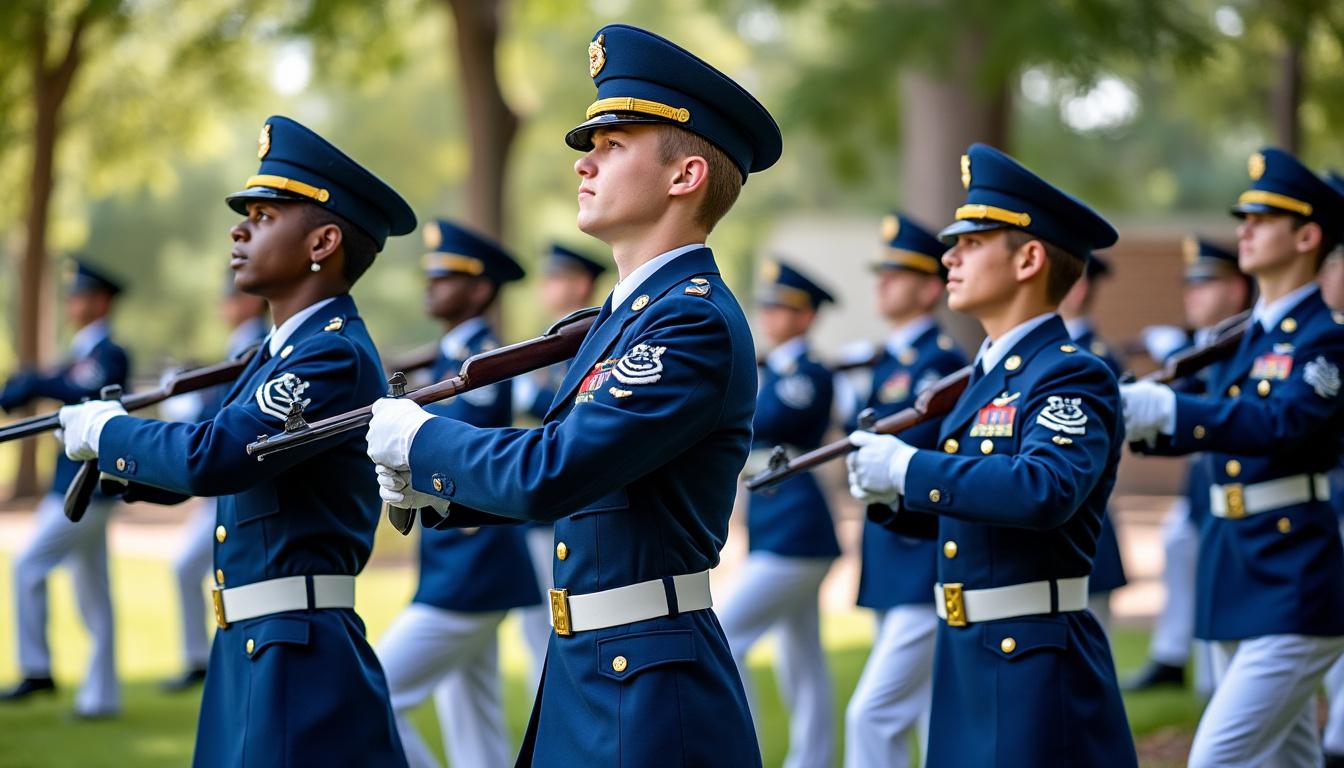
The JROTC drill competition in Matthews, North Carolina brought together leading programs, strong cadets, and a clear link between military training and scholarships. For many students, events like this shape futures in higher education and leadership.
Leading JROTC Programs In North Carolina Gather In Matthews
On a clear Saturday morning, Butler High School in Matthews welcomed 12 leading JROTC programs from across North Carolina for its annual Drill Competition. The event started at 8:15 a.m. with the national anthem, performed by the Butler High School Band in the student parking lot.
This gathering placed JROTC in the spotlight as an educational force, not only as military training but as a driver of discipline, scholarships, and stronger academic results. Families, local leaders, and school officials watched as cadets showed precision, teamwork, and confidence.
Why Matthews Hosts Top North Carolina JROTC Events
Matthews offers the space, community support, and recognition needed for a high-level JROTC Drill Competition. Butler High School’s campus turned into a full training ground, with marching areas, inspection zones, and viewing spaces for parents and guests.
The mayor of Matthews and the Board of Commissioners attended, along with senior military staff from Charlotte-Mecklenburg Schools. Their presence showed strong local backing for JROTC leadership and military training.
For students, this setting sent a message: your effort in JROTC matters to your town, your district, and your future.
Butler High School JROTC: A Leading Program In North Carolina
Event officials described the Butler High School JROTC program as the top-ranked unit in North Carolina. This status comes from consistent results in archery, drill meets, honor guard services, and weapons exhibitions, not from a single win.
Behind these results stands a clear leadership structure. Lieutenant Colonel Ott Siebert, a retired U.S. Army officer, leads the department. He also serves as deputy commandant for JCLC II at Fort Jackson, which links the high school program to broader Army-style training. He works closely with Master Sergeant Richard Day, who directs daily routines and field performance.
How Butler’s JROTC Leadership Shapes Cadets
Under this leadership, cadets follow a clear structure built around responsibility, punctuality, and precision. Each cadet learns to arrive prepared, care for a uniform, and follow a chain of command. These simple rules translate into stronger habits in class.
For example, a first-year student might start by learning how to stand at attention. Within a year, that same student might manage a small squad and report to senior cadets. This growth teaches leadership by practice, not theory.
Because of this, Butler’s JROTC holds a reputation as a place where students learn to lead themselves before they lead others.
Inside The Matthews JROTC Drill Competition
The Drill Competition in Matthews tested more than marching skills. Over the course of the day, cadets rotated through several events that stressed control, timing, and coordination.
Each of the 12 North Carolina schools brought its best group of cadets. The atmosphere felt close to a high-stakes sports tournament, but every movement was measured in inches rather than points on a scoreboard.
Key Events In The JROTC Drill Competition
The Matthews drill meet included a mix of classic and specialized events. Together they painted a clear picture of how JROTC builds discipline and teamwork.
- Armed platoon drill with rifles, focusing on synchronized movements
- Unarmed drill that highlighted posture, control, and silent commands
- Inspection events where judges checked uniforms, knowledge, and bearing
- Color guard performances presenting the national and state flags
- Honor guard services simulating ceremonies and formal duties
- Weapons demonstrations focused on safety and precise handling
In each category, judges looked for tight formations, clear command voice, and confidence under pressure. One small mistake from a single cadet could affect the whole team, which pushed students to focus and support one another.
JROTC, Military Training, And Academic Success
Organizers stressed that JROTC and military training in North Carolina serve a wider purpose than drill trophies. The structure of the program feeds directly into class performance and long-term goals in college or technical schools.
At Butler and other leading programs, data shows improved grades and attendance among cadets. Students learn to track deadlines, manage stress, and prepare thoroughly. Those habits support success in algebra, history, and science as much as in drill.
Scholarships Linked To JROTC Performance
One of the strongest outcomes from the Matthews JROTC Drill Competition and ongoing training is financial. Officials reported that Butler High School cadets have earned more than $1 million in scholarship offers. This figure includes senior ROTC awards, service academy appointments, and civilian scholarships that reward leadership and service.
For a student from a modest-income family, this support can change access to higher education. A strong record in JROTC competitions, leadership roles, and community service often forms the core of scholarship applications.
Guidance counselors now point to JROTC achievements in the same way they highlight varsity sports or advanced placement courses, because scholarship boards respect the demands of the program.
Teamwork And Leadership Lessons For Cadets
At the heart of the Matthews event stood one theme: teamwork in JROTC. No platoon succeeds if members move in different directions. Students learn quickly that personal effort matters most when it supports the group.
During one armed drill event, a cadet who lost rhythm was quietly guided back in sync by the squad leader’s steady voice. The judges saw not only a correction, but also leadership and calm under stress.
From High School JROTC To Future Leadership
Many North Carolina cadets use these lessons far beyond the drill field. Some move on to senior ROTC in college, service academies, or military enlistment. Others follow civilian paths in engineering, business, law, or education.
In each case, employers and admissions offices notice the same traits. Former JROTC cadets often arrive on time, handle criticism, and keep calm in complex group projects. They know how to follow before they try to lead.
For a student like a fictional “Alex,” a sophomore at Butler, the drill competition in Matthews might be the first time leading peers in front of a crowd. By senior year, Alex might present to scholarship panels using the same confidence built on the parade ground. The drill field becomes training for the interview room.
Why The Matthews Drill Competition Matters For Students
The Leading JROTC Programs from North Carolina that meet in Matthews do more than compete for trophies. They build a network of motivated cadets, mentors, and schools that share one goal: stronger citizens.
For you as a student or parent, events like this signal a clear path. JROTC offers structure, leadership experience, and access to major scholarship opportunities. The Drill Competition in Matthews shows what happens when preparation, community support, and determined cadets come together on one field.